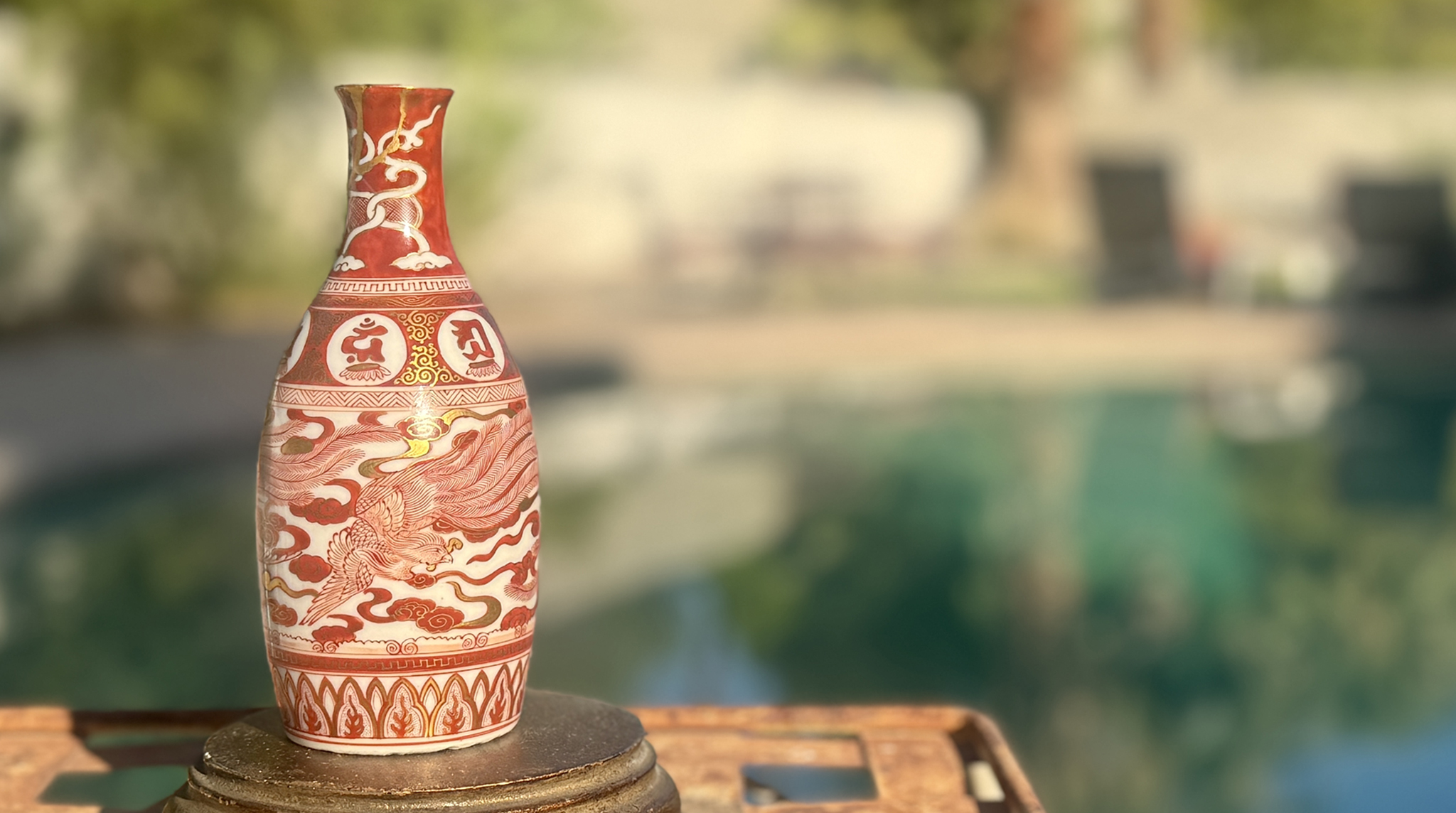
One of the things I love about antique porcelain is that every piece feels like a mystery.
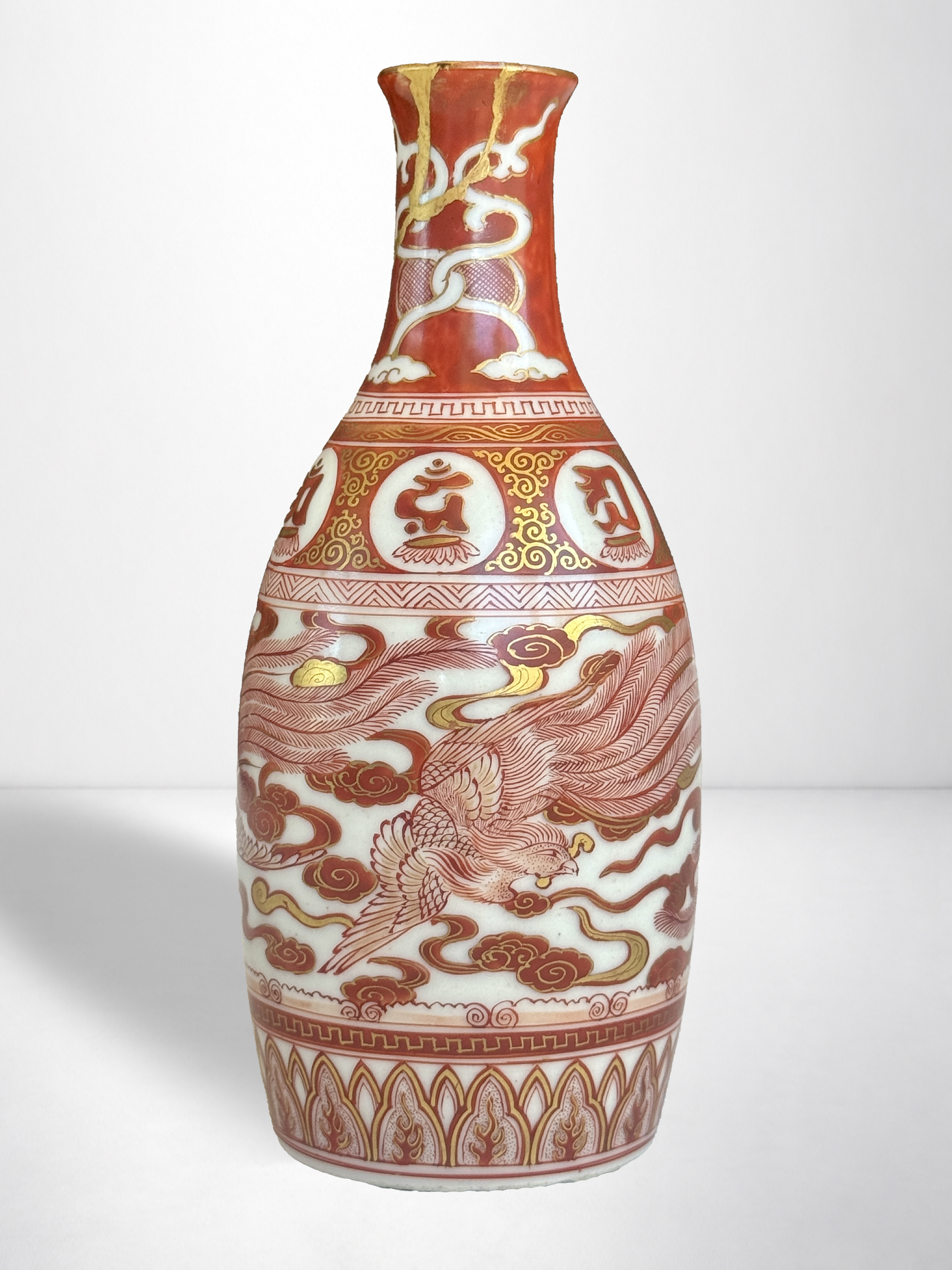
At first glance, this Japanese sake bottle didn’t seem especially different from hundreds of others. It was the familiar deep iron red of Kutani ware, accented with gold. It had the expected weight and the expected gloss. Beautiful, certainly, but not obviously extraordinary.
Then I slowed down and really looked.
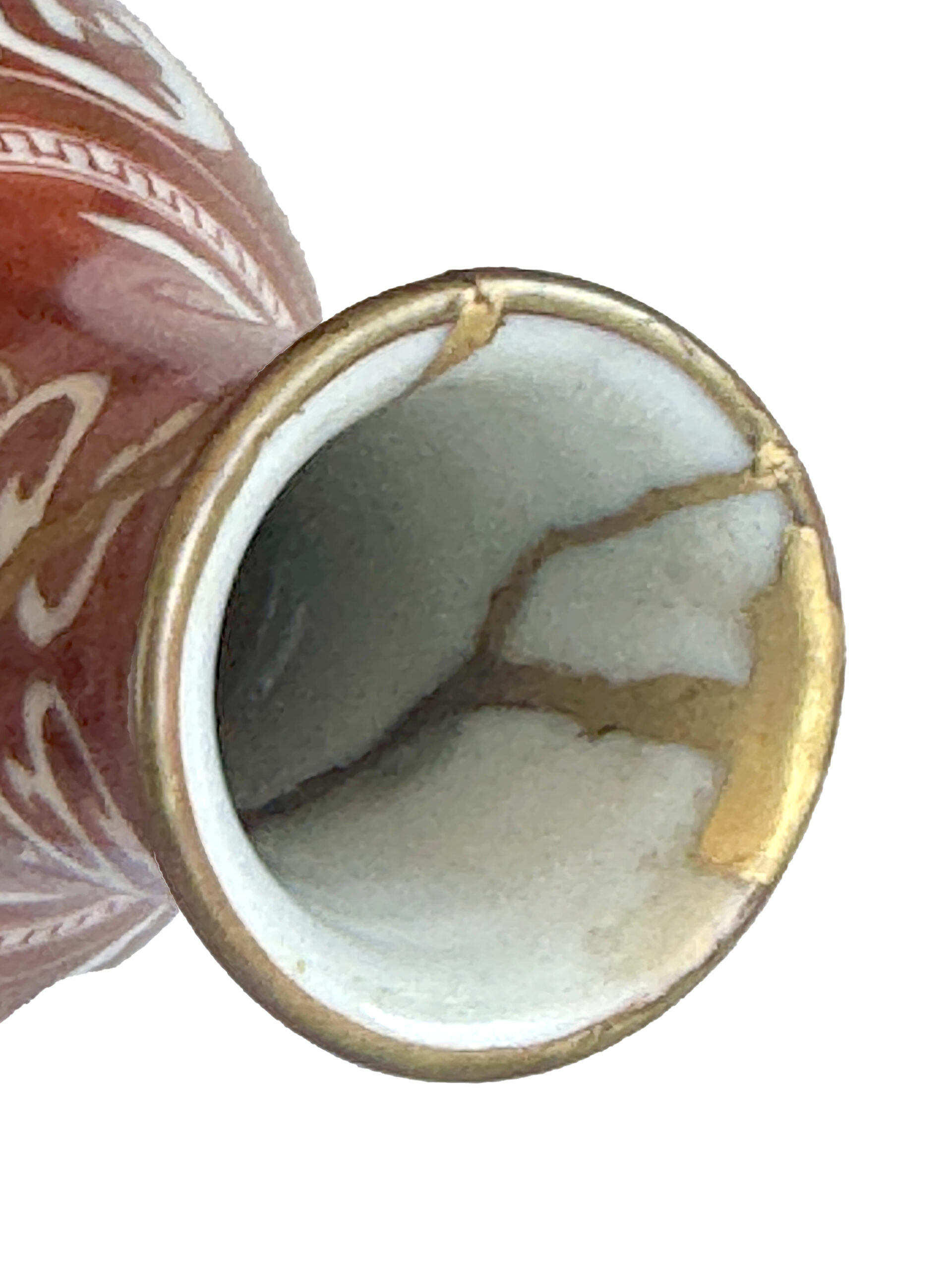
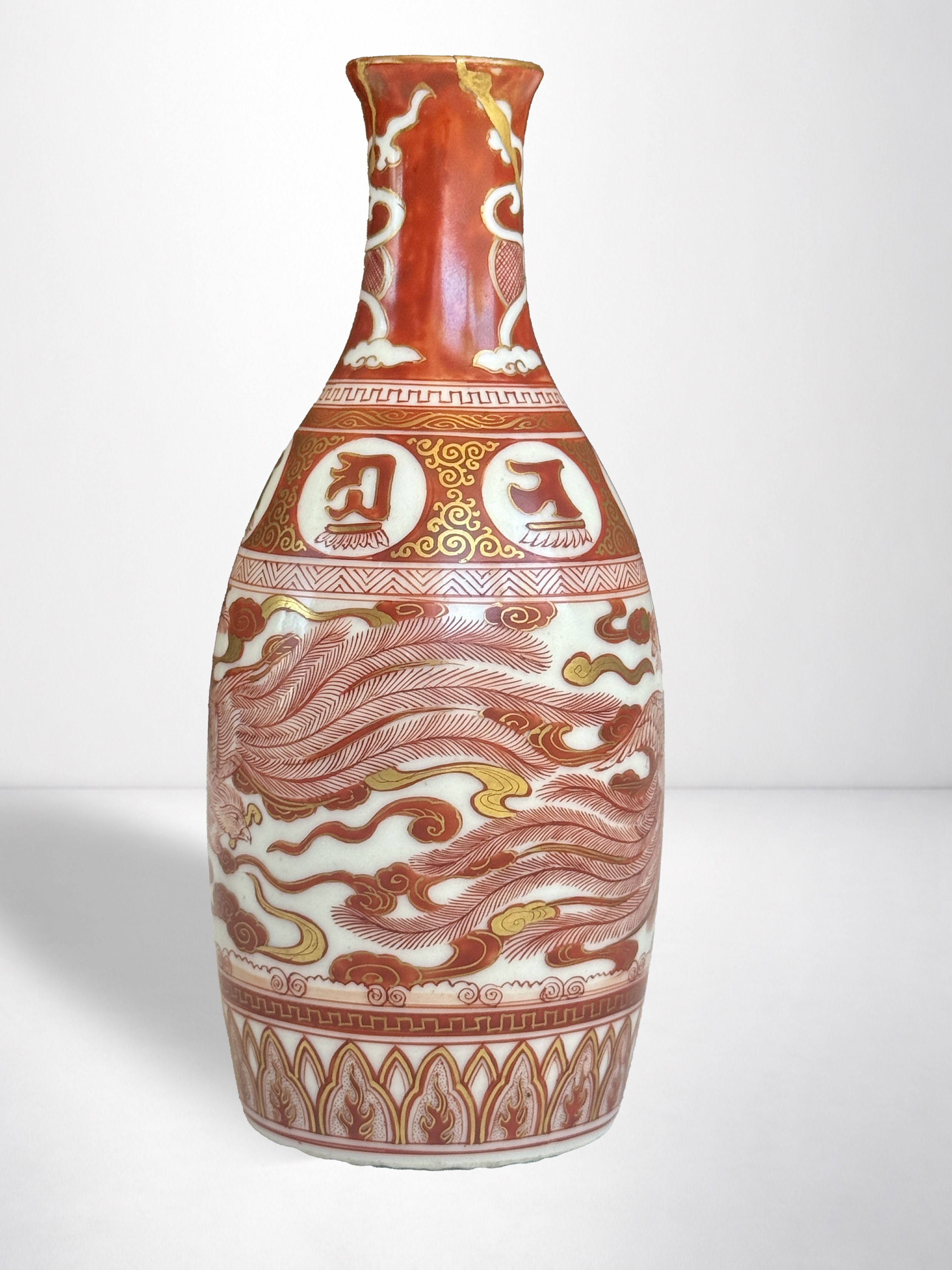
The first thing that caught my attention was the repair at the neck and rim. It appeared to be kintsugi, the traditional Japanese practice of repairing broken ceramics rather than discarding them. Kintsugi is painstaking work, requiring tremendous patience and skill. A repair like that tells you something important: at some point in its life, someone valued this bottle enough to save it.
Once I started paying attention, details began revealing themselves everywhere.
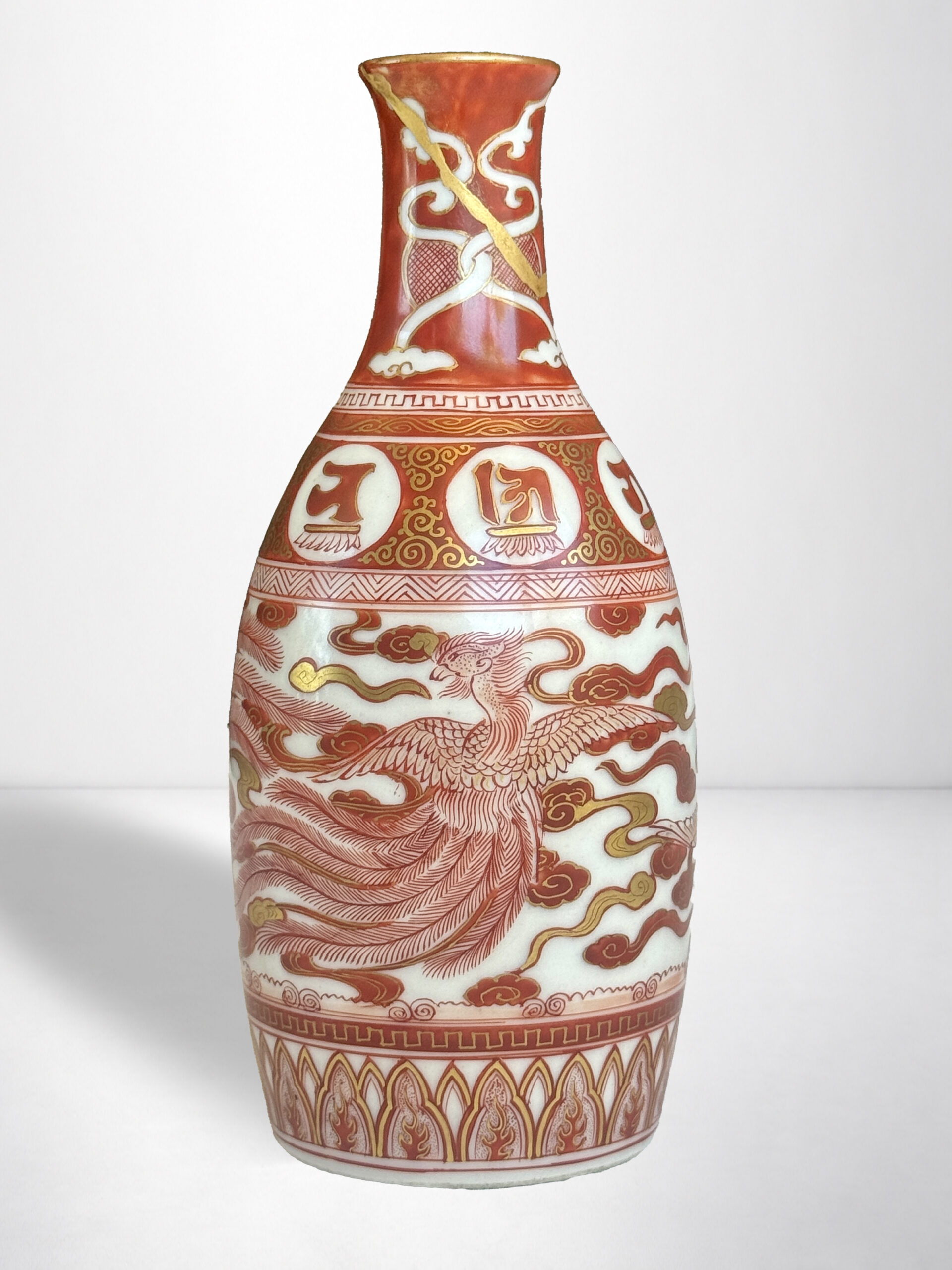
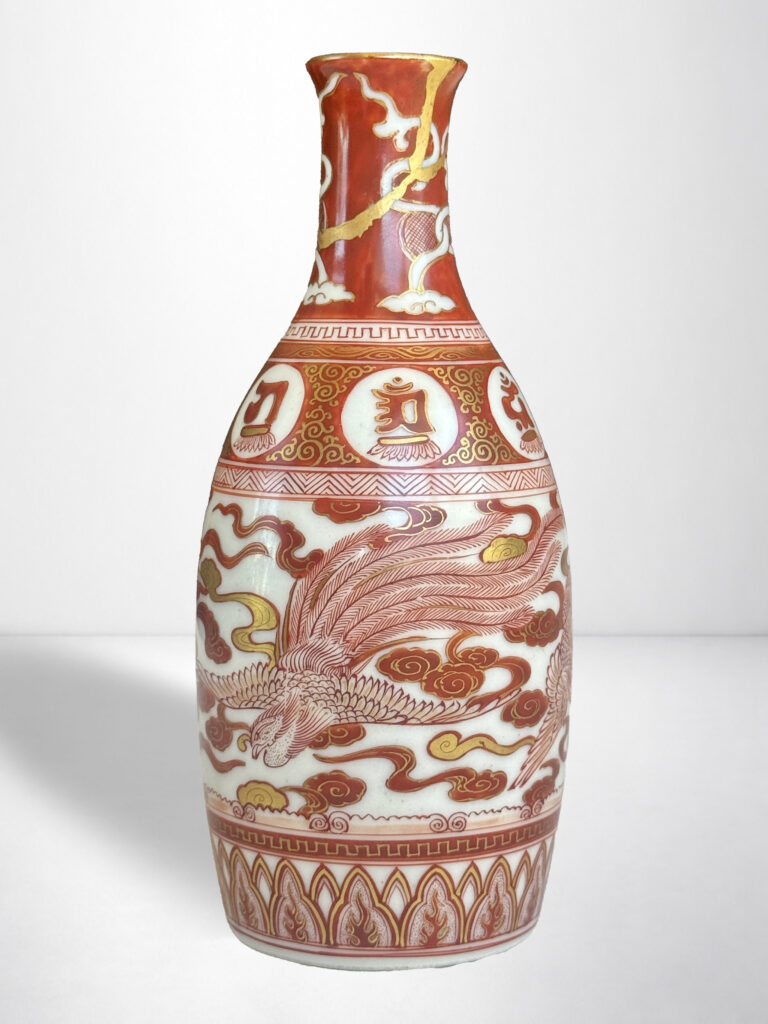
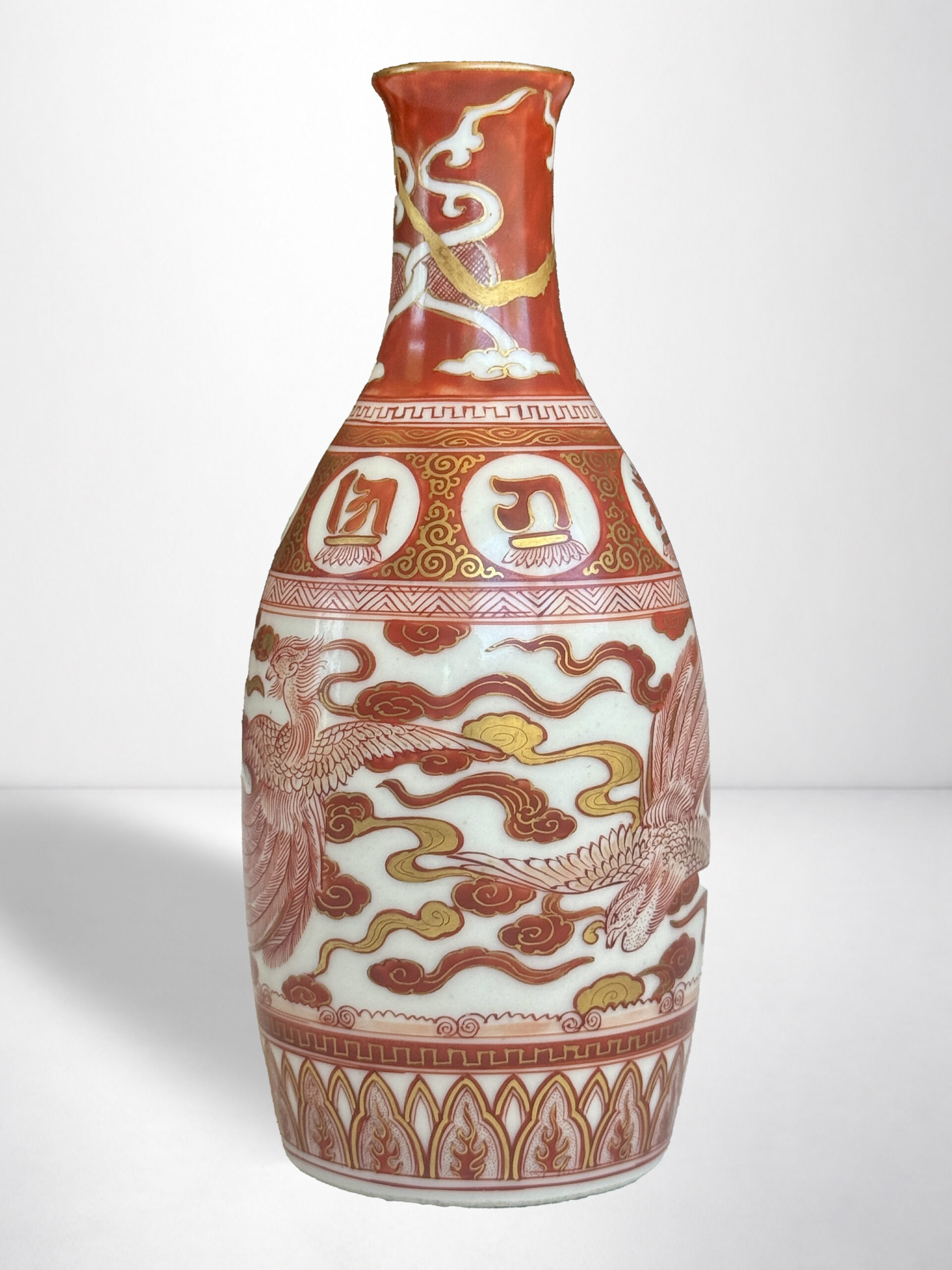
The decoration is exquisite. A magnificent phoenix rises through clouds rendered in gold and a rich, luminous red. The feathers are incredibly fine. The gilding remains crisp. The design has a confidence and precision that immediately sets it apart from ordinary export ware.
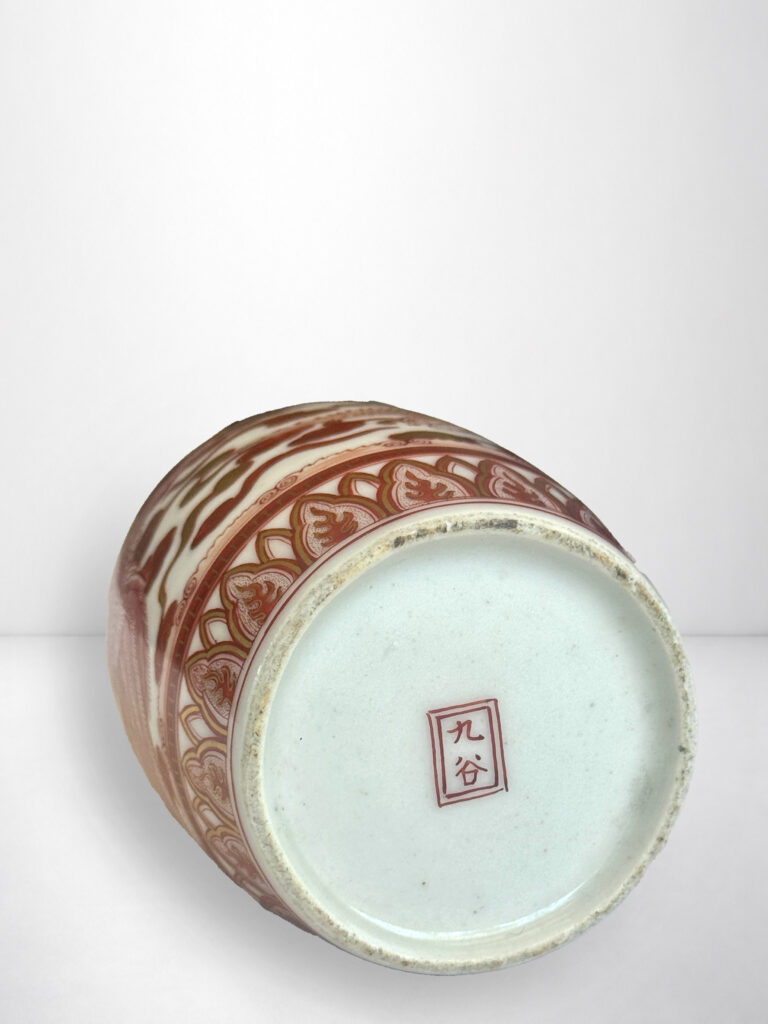
Then I looked at the bottom.
The mark simply reads Kutani. No artist’s name. No elaborate signature. Yet the wear on the foot showed genuine age, and the calligraphy itself offered clues. The brushwork, the pooled glaze within the strokes, and several archaic features of the characters suggested an older hand. What first appeared ordinary suddenly seemed much less so.
But the greatest surprise was waiting around the neck.
Encircling the shoulder of the bottle is a ring of unusual characters that looked completely unfamiliar to me. After some research, I discovered they are Sanskrit bija (seed syllables) painted on lotus thrones. Together they form the Buddhist Mantra of Light, one of the most revered esoteric prayers in Japanese Buddhism.
The Mantra of Light is associated with purification, wisdom, and the removal of illusion. By placing those sacred syllables around the vessel’s opening, the maker transformed an ordinary act of pouring into something richer. The sake passes through a ring of divine light before it reaches the cup.
I find that idea remarkably beautiful.
The phoenix rising through gold flames speaks of renewal. The mantra speaks of purification. The kintsugi repair speaks of preservation and care. Each element seems to reinforce the others.
What began as a simple sake bottle reveals itself as something far more thoughtful: a vessel designed not merely to hold a drink, but to carry a story about transformation.
Leave a Reply