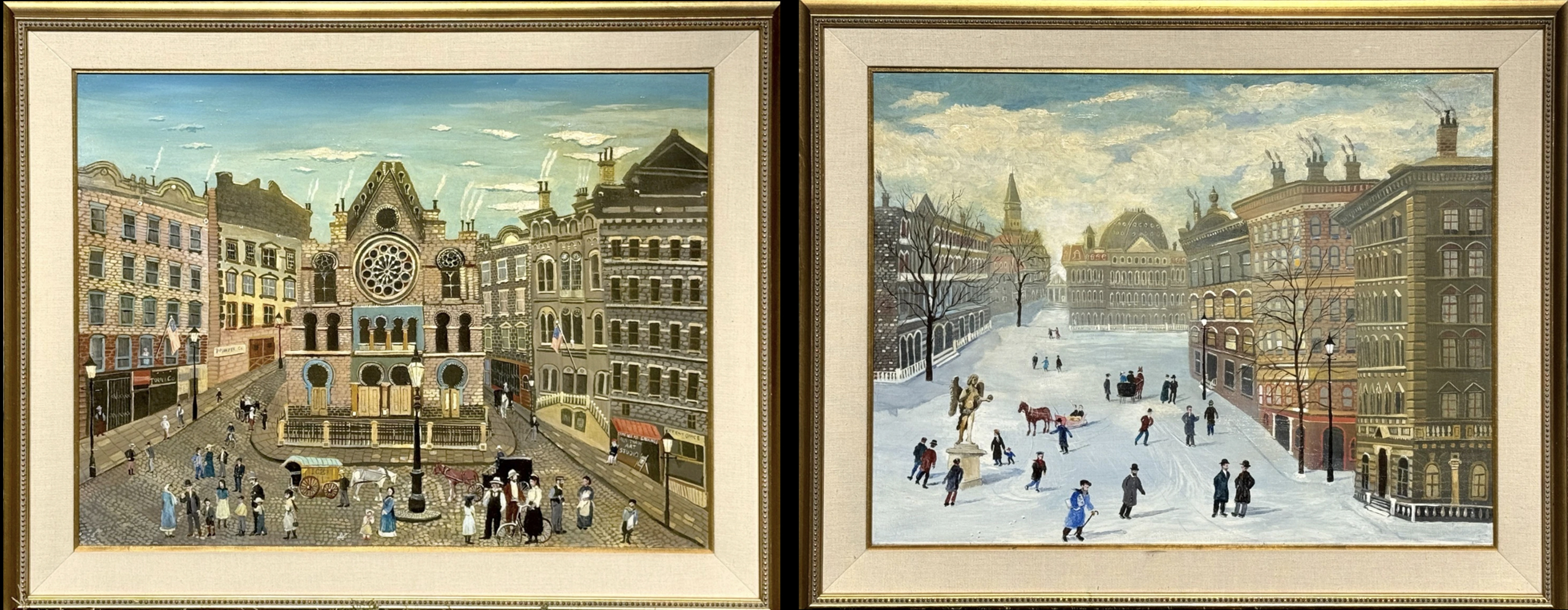
I bought these paintings because they stopped me in my tracks. That’s really it. They were vivid and bright and finely detailed. They felt like renderings of real places, like someone actually knew these places. They were beautiful—clearly not the work of an amateur or a student—but they weren’t signed. I bought them anyway.
When I got them home, I took a closer look. That’s when I noticed the paper on the back had been cut away. Not torn. Cut. Clearly someone else had gone looking for the artist’s signature. That’s when things got interesting.
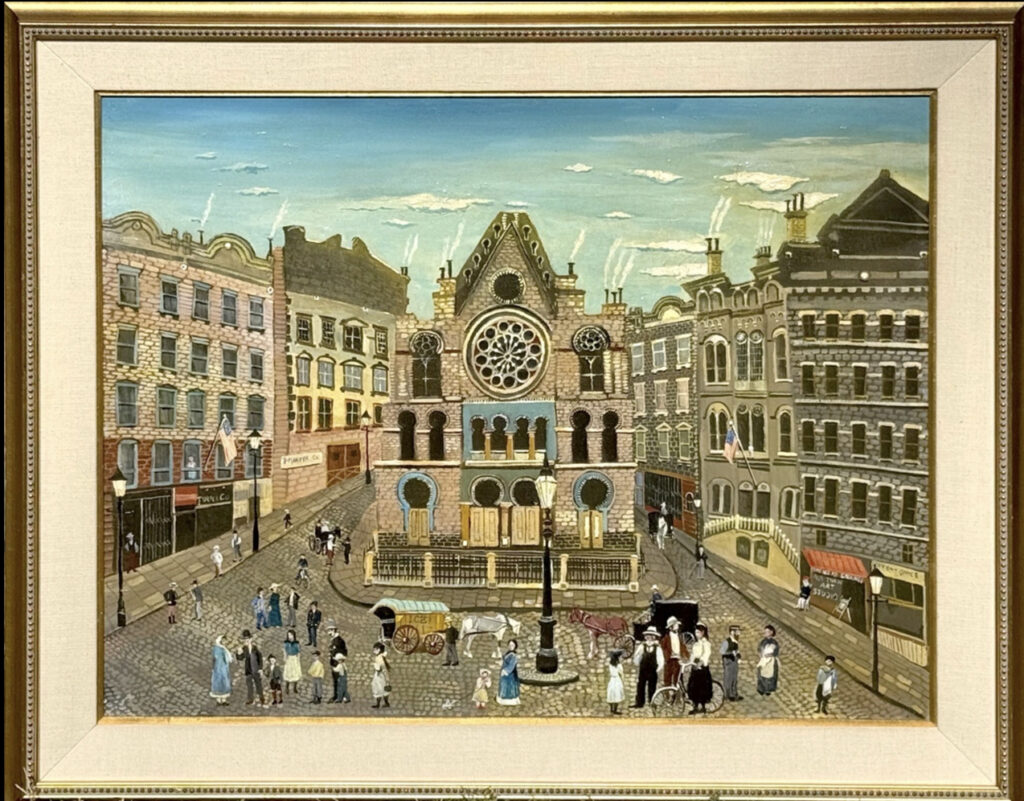
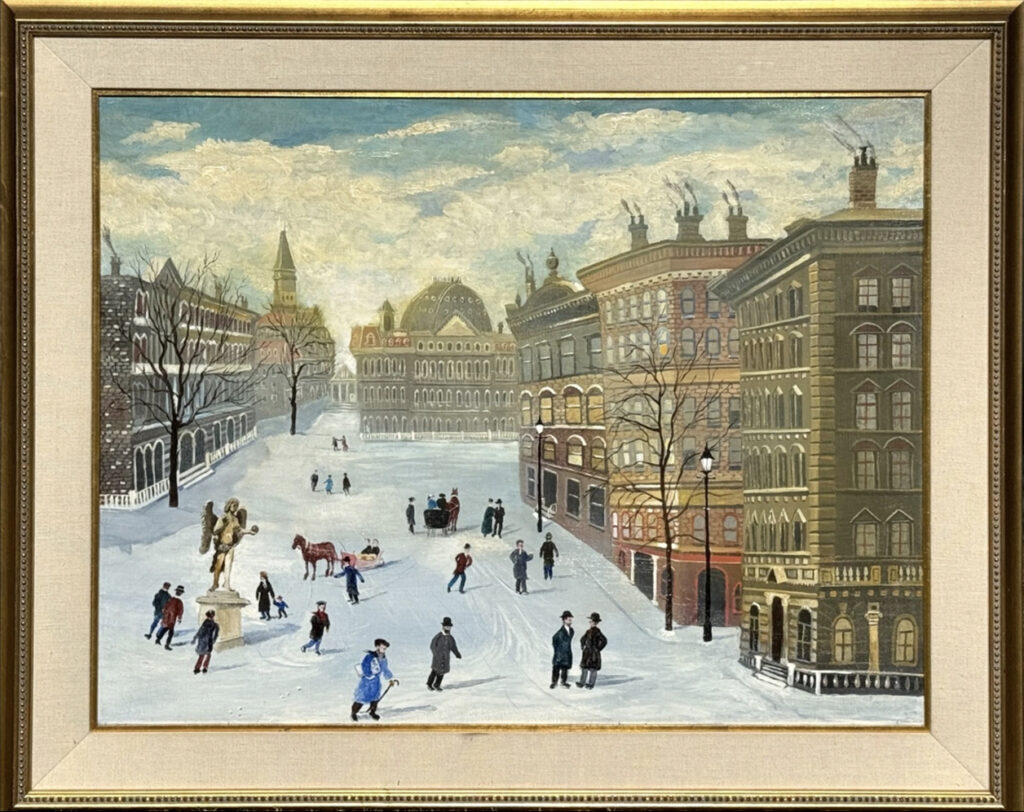
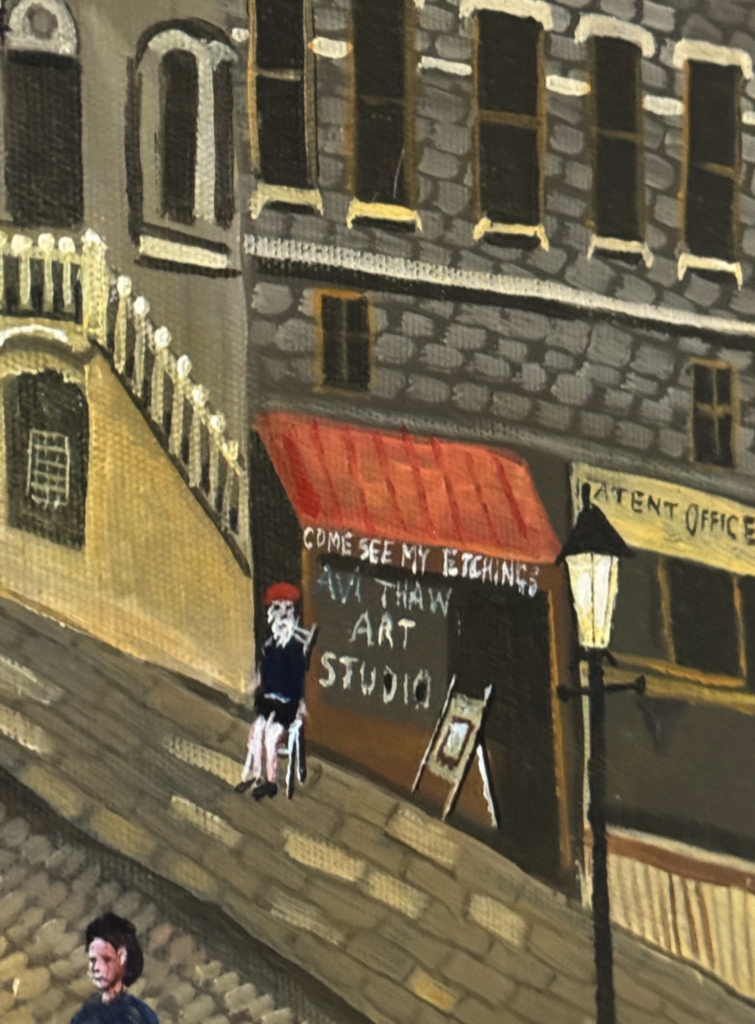
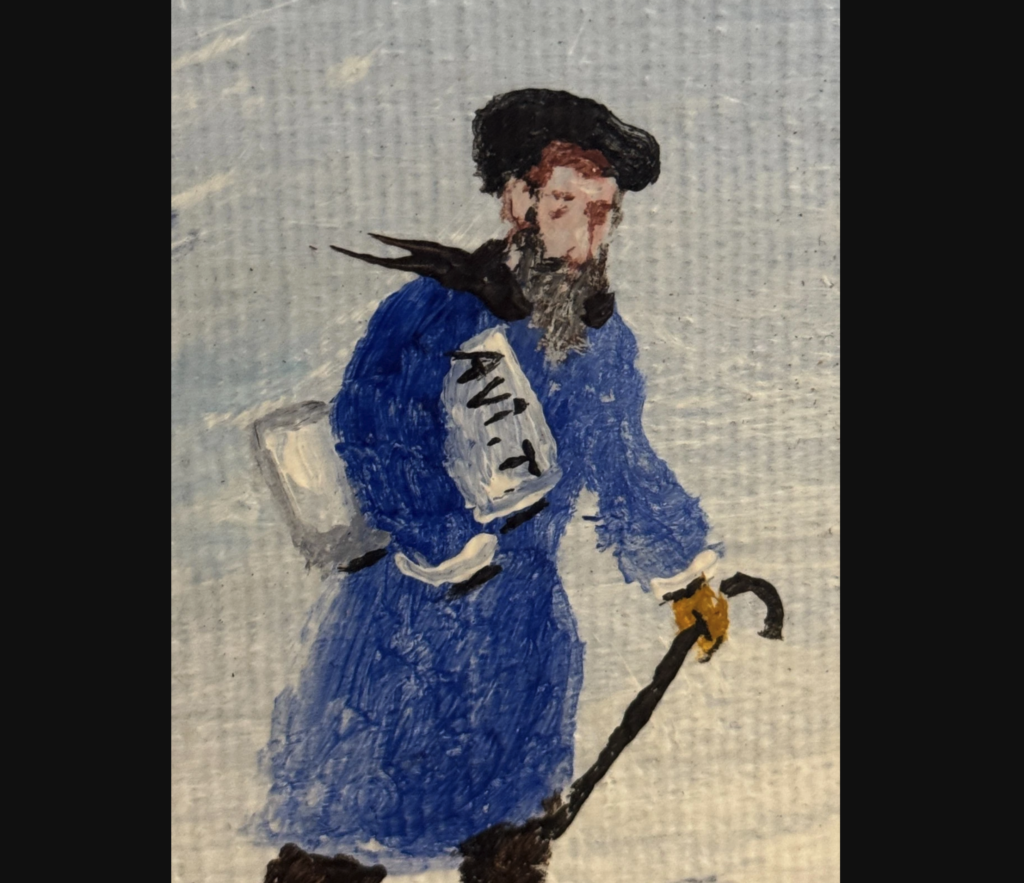
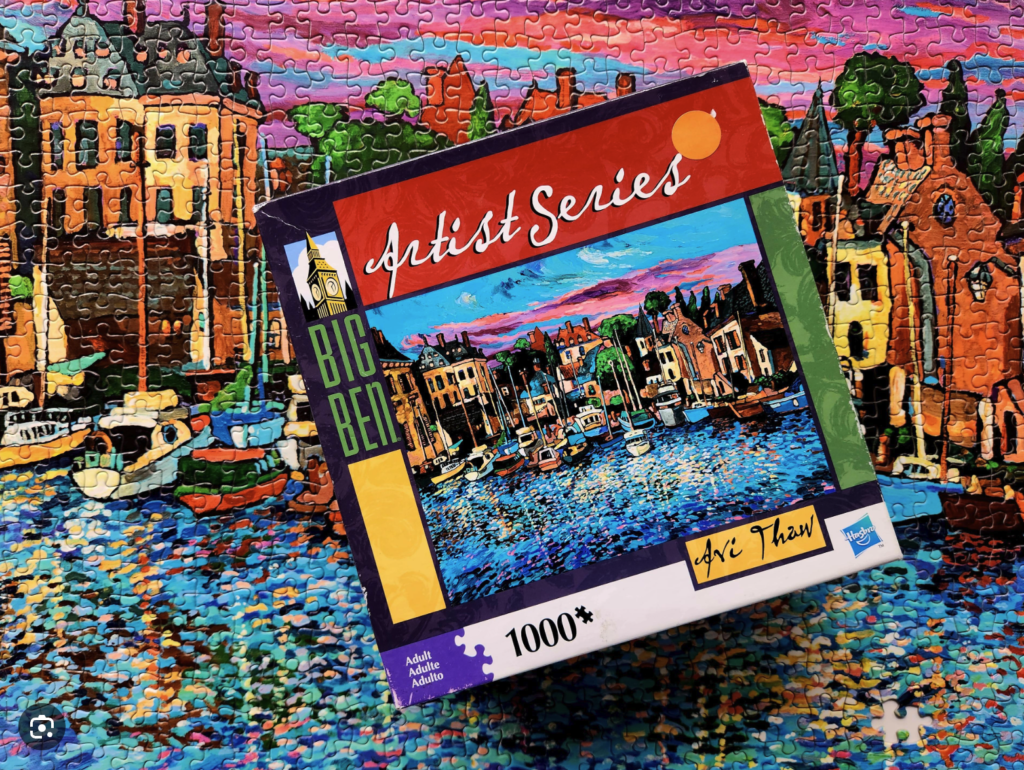
In the ice-skating scene, there’s one skater who stands out. He’s holding a newspaper with “A Thaw” as the headline. In the other painting, there’s a guy sitting outside a shop with a sign that reads “Avi Thaw Art Studio,” and a cheeky message on the awning: Come see my etchings. At first, these just felt like charming details. But the more I looked, the more intentional they felt. Like… that’s the artist. Not a name in the corner, but the artist physically placing himself into the scene.
That sent me down the Avi Thaw rabbit hole.
I hesitated at first, because his later work looks totally different. If you only know his puzzles or his graphic etchings, these paintings feel like they belong to someone else entirely. So instead of forcing the attribution, I backed up and tried to date them by vibe. When was this kind of painting actually popular?
It turns out the folk-revival cityscape thing really took off in the late ’50s and ’60s. Ice skaters were a whole moment. Other artists were doing similar scenes, but most of them leaned generic. These didn’t. These were too grounded. Too specific.
Then came the real detective work: figuring out where these scenes were.
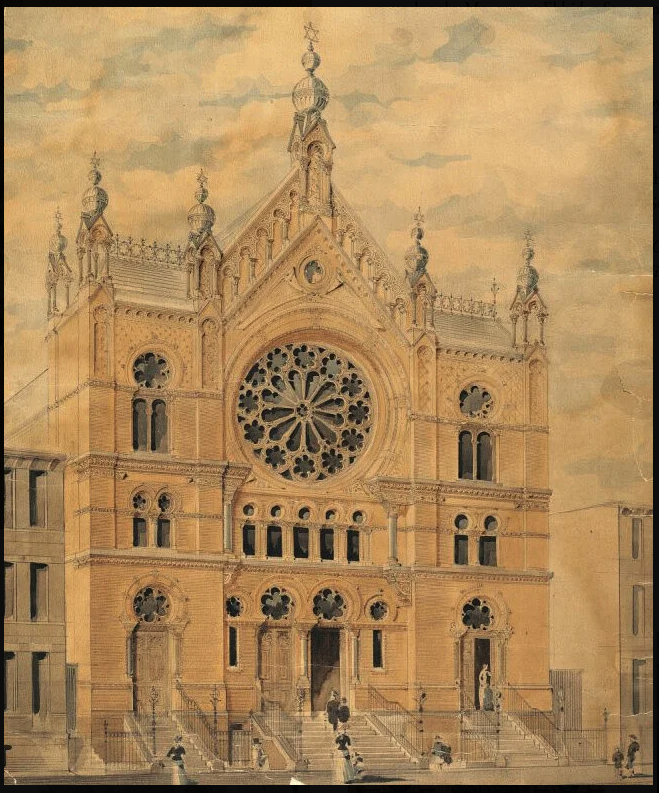
The Eldridge Street Synagogue was the easy one. It’s such a distinctive building that once you see it, you can’t unsee it. The street around it looked a little different, and the top of the building didn’t quite match what you see today—but that actually made sense once I started digging into older photos. The synagogue has been renovated extensively over the years. The bones lined up.
The skating scene was harder.
There’s an angel sculpture in the foreground, so I started there. I searched New York. Nothing. Then Europe. Still nothing. So I stopped chasing the statue and shifted to the architecture instead. The dome. The steeple. The skyline behind the rink. Those details felt civic. Deliberate.
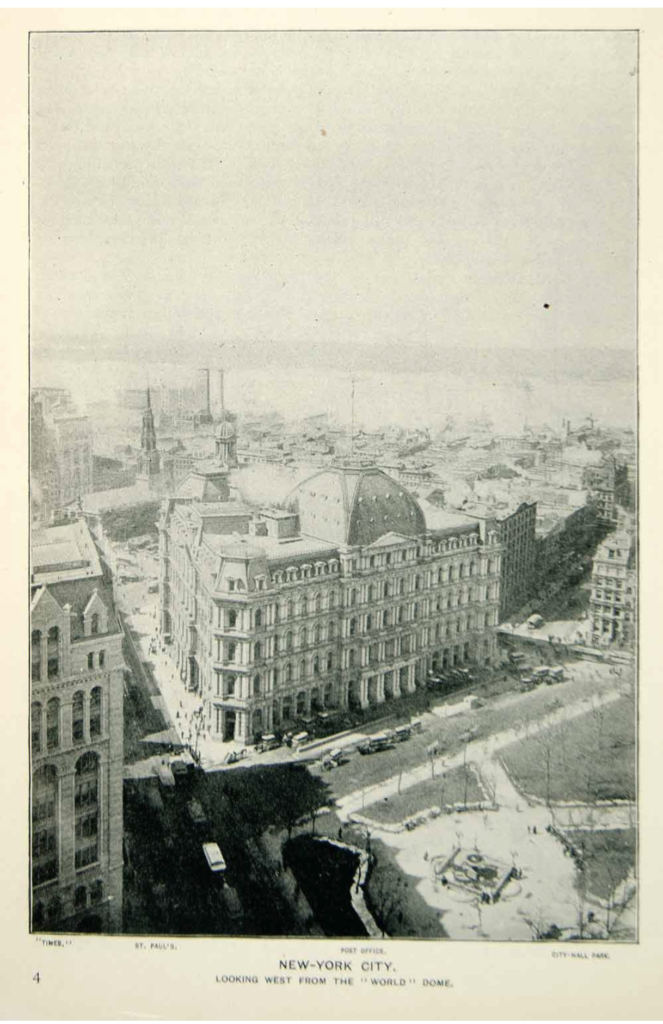
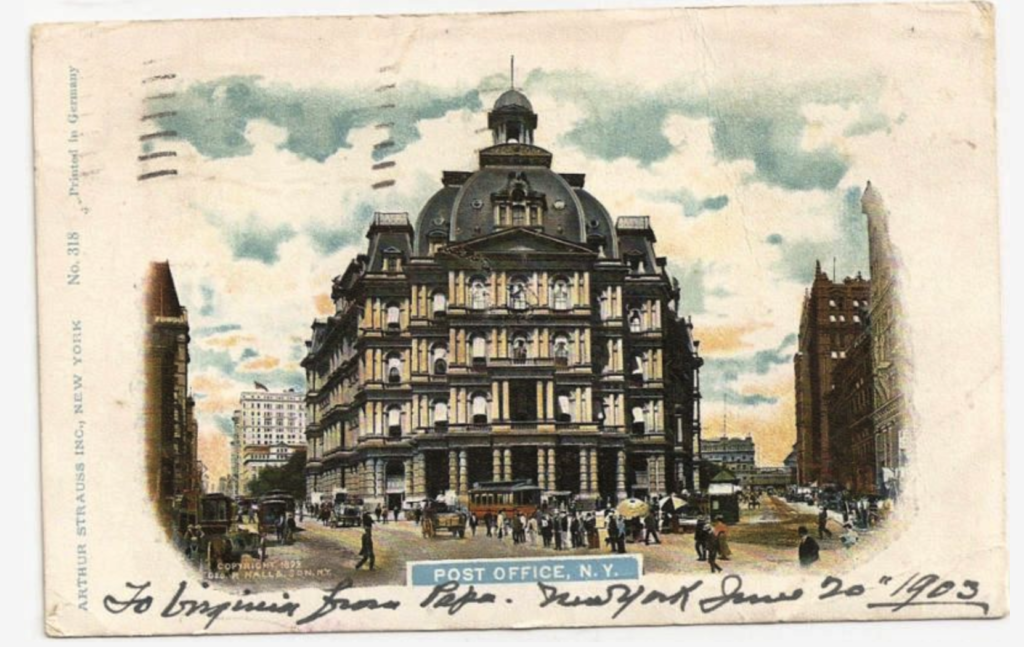
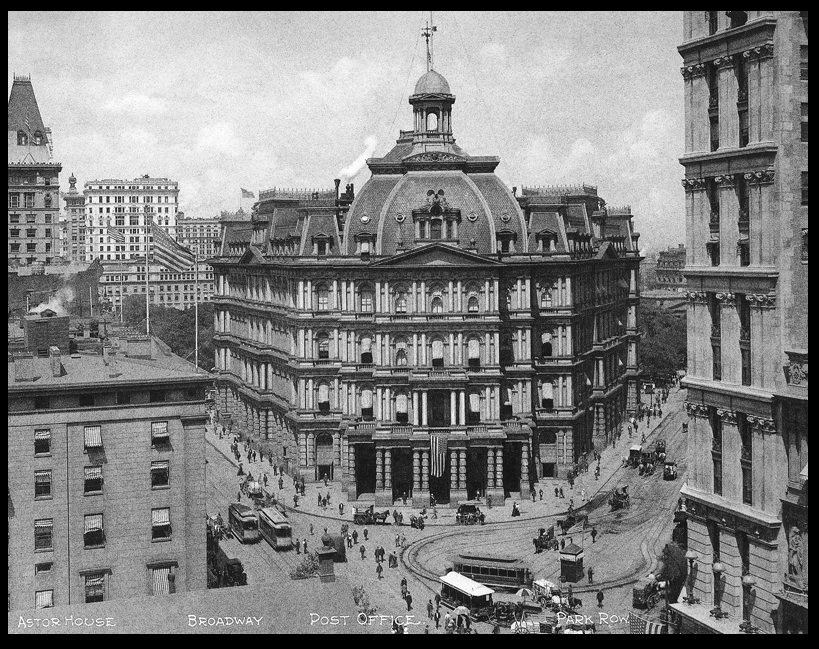
Eventually, image search did what it does best. I landed on an old postcard of New York City Hall and the City Hall Post Office. Same shapes. Same arrangement. Same view. That was the oh wow moment.
At that point, everything clicked.
The hidden self-portraits. The real locations. The timing. The way these paintings sit comfortably alongside Avi Thaw’s graphic work from the same era, before he pivoted into etchings and later puzzles. It all lined up without forcing it.
What I love most is that these paintings stand completely on their own—before you know who made them or even which city they depict. But honestly, tracking all of this down was my kind of fun.
I hope you like the paintings.
Sources:
1893 Print NYC Panorama Post Office City Hall Park
City Hall Post Office and Courthouse (New York City)
Leave a Reply