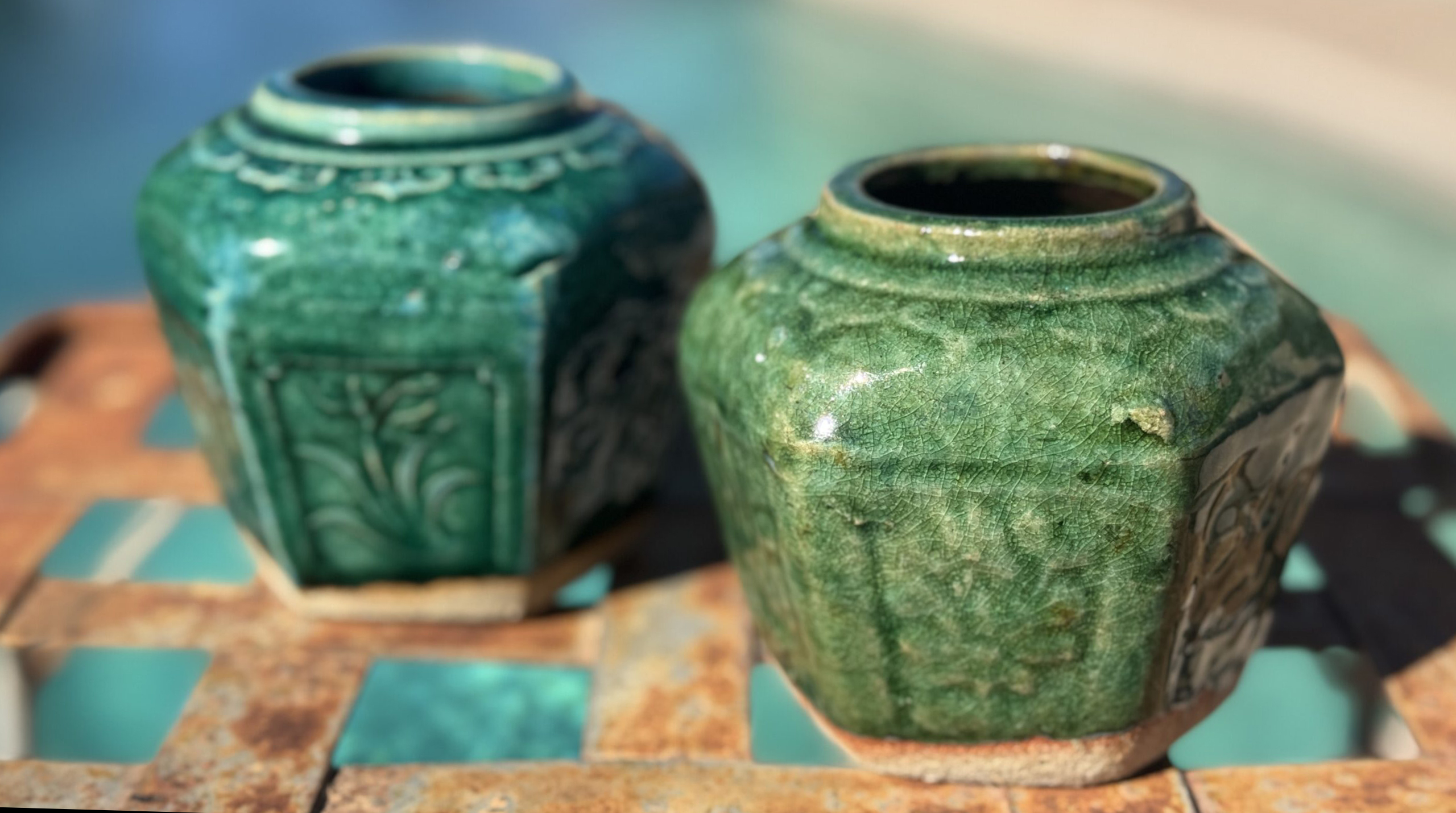
Small green Shiwan jars tend to win people over quietly. They don’t overwhelm a room. They don’t demand context. What they offer instead is surface, color, and repetition — the kind of object that looks better the longer you live with it, and better still when you have more than one.
They’re also easy to underestimate.
Where These Jars Come From
These hexagonal jars were produced in Shiwan, a ceramic center in Foshan, Guangdong Province, active for centuries and known for durable, utilitarian wares. Most small green examples date to the late Qing through early Republic period, roughly 1900–1930.
They were made as functional storage vessels, often for ginger, spices, or preserved foods, and many were produced specifically for export markets, particularly Britain and the Netherlands. That origin explains their consistent size, sturdy walls, molded decoration, and exterior-only glaze. These were meant to stack, ship, and survive.
They were not prestige objects when they were made — and that’s exactly why they’re appealing now.
Why the Green Glaze Matters
Color is the first thing people respond to, and for good reason. Shiwan green glazes are lead-silicate glazes colored with copper and modified by iron. Within that family, not all greens behave the same.
Collectors tend to favor:
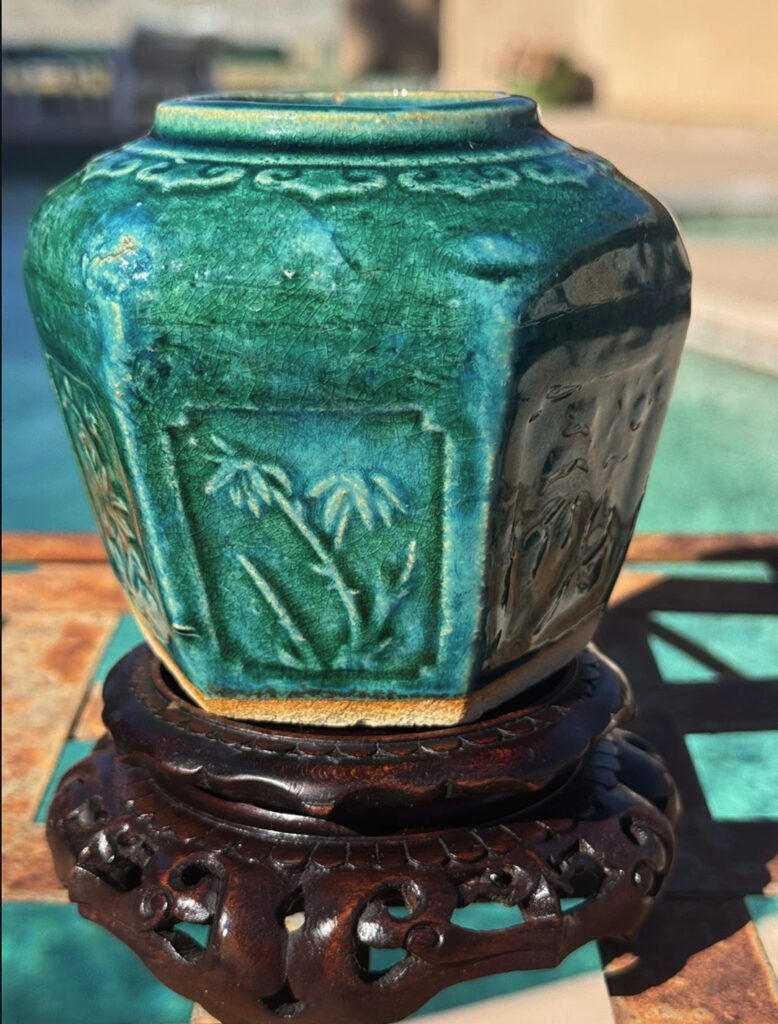
- blue-green or jade-leaning tones, which feel cooler and deeper
- glazes that pool slightly in recesses and thin at edges
- surfaces that shift subtly in different light
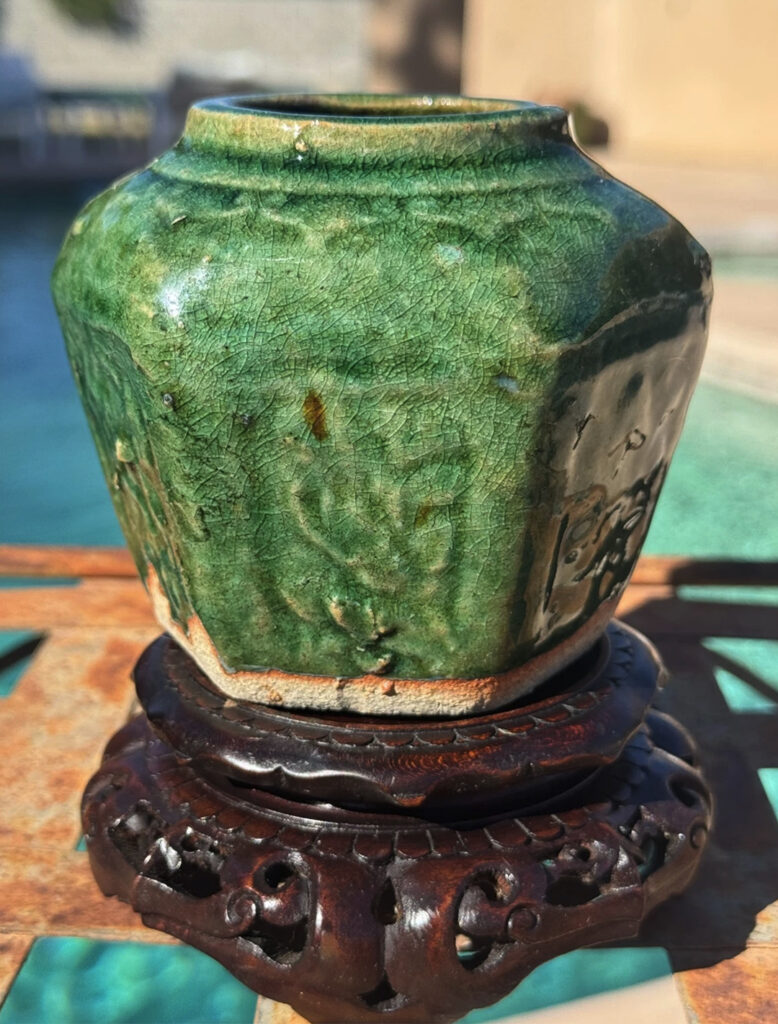
Olive or yellow-green glazes aren’t “wrong,” but they tend to read heavier and flatter. Blue-green glazes usually signal better firing control and produce more visual movement across the faceted form.
Glossy, Crackled, or Worn: What Finish Tells You
Finish matters as much as color.
- Straight glossy glazes can be very good when they show depth and variation. A flat, even gloss is usually less interesting.
- Crackle is neither inherently better nor worse. Fine, irregular crackle that integrates into the glaze often reads as age and natural cooling. Loud, uniform crackle can feel decorative or later.
- Softened or “buried” surfaces — where the glaze looks dulled, pitted, or gently eroded — can be appealing when the form remains intact. This kind of wear suggests long use or exposure rather than neglect.
What matters is coherence. The glaze should feel like it belongs to the clay and the form, not like an effect layered on top.
Form: Why Hexagonal Is a Plus
At this small scale, form does a lot of the work.
Hexagonal jars tend to hold value better than simple round ones because:
- the facets give structure to the glaze
- molded panels read more clearly
- proportions are easier to judge
Strong examples have crisp facets, readable decoration under glaze, straight shoulders, and a mouth rim that feels deliberate. When the form slumps or the geometry softens too much, even a nice glaze can’t fully recover the piece.
Signed or Unsigned?
Most small Shiwan hex jars are unsigned, and that is normal. These were workshop wares, not studio pieces. A mark or stamp is uncommon in this form and does not automatically improve an example.
Here, material quality outweighs markings. Collectors expect these jars to communicate through glaze, form, and surface, not through names.
Why They Reward Collecting
These jars make the most sense in pairs or small groups. When you see several together, the differences in glaze tone, finish, and sharpness become the point. They add visual interest without clutter and bring texture and color into a room without demanding focus.
When all is said and done, they’re simply very pretty pots and a pleasure to live with.
Leave a Reply